 MechaOBD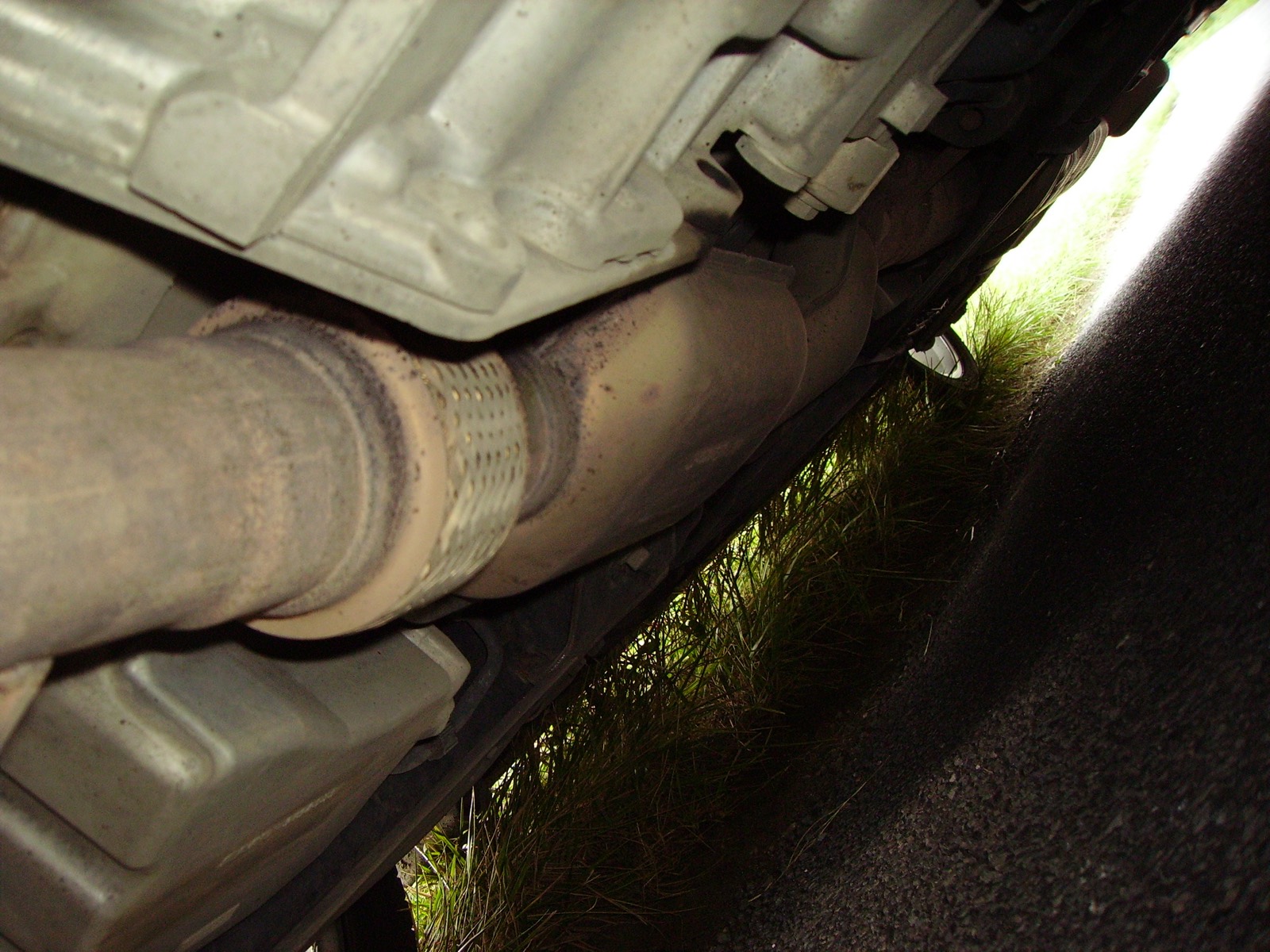

P0420 means “Catalyst System Efficiency Below Threshold, Bank 1.” The engine computer compared the signals and operating conditions used to monitor the Bank 1 catalytic converter and decided its oxygen-storage or emissions-cleanup performance was below the calibrated threshold.
The code makes the catalytic converter an important suspect. It does not automatically prove the converter is the root cause or the only problem.
Before buying one of the more expensive parts under the car, check the complete code set, engine operation, exhaust integrity, sensor behavior, and vehicle-specific service information. A converter can fail. It can also be damaged by another problem—or accused by data that needs a closer look.
What does “Bank 1” mean?
Bank 1 is the side of the engine containing cylinder 1. An inline four-cylinder engine normally has only one bank. V-shaped and horizontally opposed engines have two banks, and the physical left or right side depends on the engine design.
P0420 refers to Bank 1. The corresponding generic catalyst-efficiency code for Bank 2 is P0430.
Do not identify Bank 1 by standing in front of the car and guessing. Use service information for the exact year, make, model, and engine.
How the car decides to set P0420
A three-way catalytic converter stores and releases oxygen while promoting chemical reactions that reduce harmful exhaust pollutants. The powertrain control module evaluates catalyst performance only under particular operating conditions.
On many gasoline vehicles, an upstream oxygen or air-fuel-ratio sensor helps manage the mixture, while a downstream oxygen sensor helps monitor what is happening after the converter. The diagnostic strategy is vehicle-specific, but the broad idea is that a healthy catalyst changes the exhaust behavior in a recognizable way.
If the monitored result falls below the manufacturer’s threshold during the required test conditions, the computer can store P0420 and illuminate the check engine light.
That is more precise than saying, “The rear sensor copied the front sensor, so the converter is bad.” Sensor type, control strategy, temperature, engine operation, and the test algorithm differ by vehicle.
P0420 symptoms
Many drivers notice only a steady check engine light. Depending on the underlying cause, you may also experience:
- reduced fuel economy;
- an exhaust smell;
- loss of power at higher load;
- rattling from a physically damaged converter;
- additional misfire or fuel-trim symptoms;
- a failed emissions inspection;
- no obvious drivability change at all.
A flashing check engine light is not the normal “P0420-only” presentation. Flashing commonly signals an active severe misfire. Reduce load and read Flashing vs. Solid Check Engine Light.
Is P0420 always a bad catalytic converter?
No—but an aged or damaged catalyst is a real possibility.
The right diagnosis asks two separate questions:
- Is the catalyst actually below its required efficiency?
- If it is, what caused it to deteriorate?
Replacing a converter without answering the second question can produce an expensive repeat failure.
Common P0420 causes
A deteriorated catalytic converter
Catalysts can lose oxygen-storage capacity and conversion efficiency with age and use. Physical damage, contamination, overheating, and thermal cycling can also reduce performance.
When testing confirms that the converter is below threshold and the rest of the engine and exhaust system are operating correctly, replacement may be justified.
An active or historical misfire
A severe misfire can send unburned fuel into the exhaust and overheat the converter. Even less dramatic misfire activity can shorten catalyst life over time.
If P0300 or cylinder-specific misfire codes are present, diagnose them before treating P0420 as an isolated converter problem. A flashing light raises the urgency.
A rich or lean air-fuel condition
Mixture faults can reduce catalyst efficiency, alter sensor patterns, and damage the converter. Fuel-trim codes, airflow faults, injector problems, fuel-pressure problems, intake leaks, or biased sensor information may be part of the same story.
Resolve an active engine-control problem before judging the catalyst.
An exhaust leak
A leak near a sensor or ahead of the monitored converter can introduce outside oxygen or alter the exhaust signal. Look for soot tracks, damaged flex sections, loose joints, cracked manifolds, and gasket leaks using the correct safe inspection procedure.
Exhaust components become dangerously hot. Do not crawl under a vehicle supported only by a jack, and do not touch or test hot components without appropriate equipment and training.
Oxygen-sensor, heater, circuit, or connector problems
A sensor can respond slowly, report incorrectly, or lose its heater or circuit integrity. Wiring routed near hot exhaust components can also fail.
The presence of P0420 alone does not prove either oxygen sensor is bad. Test sensor operation and circuits according to the manufacturer’s procedure. Replacing the downstream sensor because it appears in the monitoring system is not a diagnosis.
Vehicle-specific calibration or service issues
Manufacturers sometimes publish technical service bulletins that address catalyst-monitor calibration, software updates, break-in behavior after converter replacement, or model-specific faults. For example, an American Honda bulletin for certain CR-Z vehicles with P0420 called for a software update and test drive before deciding whether the converter needed replacement.
That bulletin does not apply to every Honda, much less every car. Its lesson is broader: check the information for the exact vehicle before applying a generic parts list.
Can you drive with a P0420 code?
If P0420 is the only code, the light is steady, the car runs normally, and there are no red warnings, a short period of gentle driving while arranging diagnosis is commonly reasonable.
Stop and reassess if:
- the check engine light flashes;
- the engine shakes or loses substantial power;
- the converter or exhaust glows, smells extremely hot, or rattles badly;
- the temperature or oil-pressure warning appears;
- smoke, raw-fuel odor, or a major exhaust leak is present.
A restricted or physically damaged converter can affect engine performance. An active misfire can rapidly raise exhaust temperature. The code label does not describe the whole safety condition; the car’s behavior does.
A sensible P0420 diagnostic order
1. Scan every code and status
Record stored, pending, and permanent codes. Do not focus only on P0420. Misfire, fuel-trim, airflow, oxygen-sensor, heater, temperature, or circuit codes can change the plan.
Save freeze-frame information if available. It may show engine load, temperature, speed, and mixture data near the time the fault was recorded.
2. Confirm the engine reaches normal operating conditions
The catalyst monitor requires specific enabling conditions. A cooling-system or temperature-sensor issue can prevent or distort normal monitoring. Use vehicle-specific specifications rather than a universal temperature guess.
3. Address active misfire or mixture faults first
If the engine is misfiring or fuel control is outside the expected range, diagnose that condition before evaluating the converter. Otherwise, the converter may be judged while the upstream problem is still affecting it.
4. Inspect the exhaust system
Check for leaks, impact damage, loose heat shields, rattling substrate, damaged wiring, and connector problems. Use smoke testing, pressure testing, or other approved procedures where appropriate.
5. Evaluate sensor and fuel-control data
Look at relevant oxygen or air-fuel-ratio sensor behavior, fuel trims, engine load, and temperature under the manufacturer’s specified conditions. A graph can reveal patterns that a single voltage value cannot.
Do not interpret every sensor with the old rule that it must switch between the same two voltages. Wideband air-fuel-ratio sensors and different downstream strategies require the correct service information.
6. Check technical service bulletins and software level
Search by VIN, model year, engine, and code. Confirm whether a bulletin actually applies before using it.
7. Confirm catalyst failure before replacement
Professional diagnosis may use scan-tool monitor data, temperature testing, exhaust-gas analysis, pressure testing, scope patterns, or the manufacturer’s prescribed procedure. The correct test depends on the vehicle.
The goal is not to prove that converters never fail. It is to avoid replacing one before the evidence points there—and to correct the condition that may have damaged it.
What not to do with P0420
Do not install an oxygen-sensor spacer to hide the code
Moving a sensor out of the exhaust stream can mask monitoring rather than repair emissions performance. It may also violate emissions-tampering laws. Fix the underlying condition.
Do not rely on a “catalytic converter cleaner” as a diagnosis
A bottle cannot repair melted, broken, contaminated, or chemically deteriorated catalyst material. If a change occurs, it still does not identify the root cause or prove a lasting repair.
Do not clear the code immediately before an emissions test
Clearing codes resets readiness monitors. The car may be rejected as “not ready,” and the code may return when the catalyst monitor runs again.
Do not replace both oxygen sensors by default
Test the sensors, circuits, exhaust, mixture, and catalyst. A parts cannon is still a cannon even when the parts are smaller than the converter.
How MechaOBD can help with P0420
With a supported vehicle and compatible BLE adapter, MechaOBD can read available stored, pending, and permanent codes and display live vehicle readings. A Guided Health Check can capture a broader operating picture than the P0420 label alone.
An optional Diagnostic Report can then organize the available vehicle context, codes, and sensor readings into likely causes, supporting evidence, limitations, and next steps. It can be saved as a PDF for a repair conversation.
The app cannot inspect the converter, detect every exhaust leak, or replace vehicle-specific testing. It can help you arrive with the entire clue set rather than one code and a search result.
See How to Read Check Engine Light Codes With an iPhone, or download MechaOBD from the App Store. A compatible BLE adapter is required for vehicle diagnostics.
Frequently asked questions
What is the most common fix for P0420?
There is no trustworthy universal fix. A deteriorated converter is common, but misfires, mixture faults, exhaust leaks, sensor or circuit problems, and model-specific software issues must be considered. Test the vehicle before buying parts.
Can a bad oxygen sensor cause P0420?
Incorrect sensor behavior or a circuit fault can affect catalyst monitoring, but P0420 by itself does not prove an oxygen sensor has failed. Evaluate the sensor and circuit using the manufacturer’s procedure.
Can a misfire cause P0420?
Yes. Misfires can overheat and damage a converter, and active misfire changes the exhaust entering it. Diagnose misfire codes first, especially if the check engine light flashes.
Will P0420 clear itself?
The light may turn off if the fault is no longer detected over the required monitoring, but stored or permanent information can remain. An intermittent disappearance does not prove the catalyst or underlying condition is healthy.
How much does it cost to fix P0420?
The cost depends entirely on the confirmed cause, vehicle, labor market, and parts requirements. An exhaust leak, wiring repair, software update, sensor replacement, engine repair, and compliant catalytic converter have very different costs. Get the cause confirmed before requesting a repair estimate.